Big ideas rarely emerge in isolation.
They take shape in environments where questions are encouraged, disciplines intersect, and conversations extend beyond the classroom.
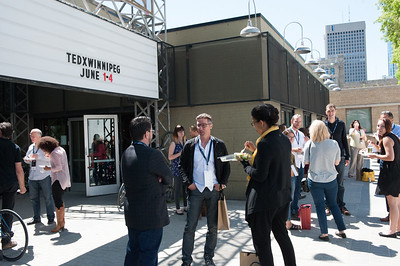
At the University of Manitoba (UM), that kind of environment is not accidental. It is cultivated through research, interdisciplinary collaboration, partnerships, and a commitment to sharing knowledge openly with the broader community. As the host of TEDx Winnipeg, the University of Manitoba’s partnership reflects a shared commitment to fostering and amplifying bold ideas across our community.
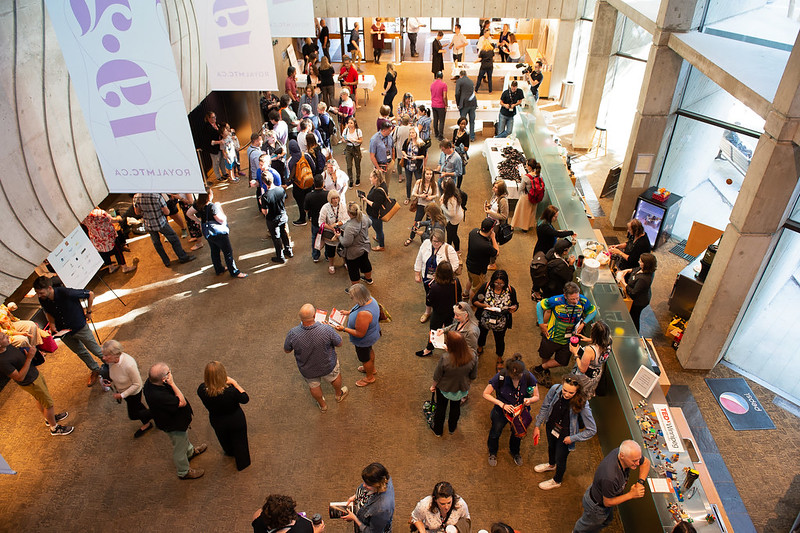
TED’s belief that ideas change everything reflects this same philosophy. That is why TEDx Winnipeg is proud to return to UM for the second time at the world-class Desautels Concert Hall.
TEDx Winnipeg spoke with three of this year’s speakers to explore how their work at UM connects to their talks and how Manitoba’s university serves as an incubator for big ideas.
Peter Denton, an instructor of philosophy and ethics at UM, sees the university increasingly recognizing its collective responsibility to address the urgent crises facing our world. He describes a culture once heavily focused on individual achievement in research and scholarship that is now gradually giving way to multidisciplinary cooperation centered on shared problem-solving.
“True innovation,” says Denton, “emerges from educating thoughtful, creative, and socially responsible citizens. Innovation means recognizing new possibilities within existing systems, or reimagining how different systems can work together to solve complex challenges.”
Denton sees the University of Manitoba as a hub of innovation where cross-disciplinary work is intentional and prioritized. In a world facing complex challenges, he believes the ability to work collaboratively across disciplines is essential to building a sustainable, just, and peaceful future.
For Rizwan Manji, Associate Professor in the Department of Surgery at UM, collaboration is deeply human. His work reflects the power of compassionate individuals working together to generate and share knowledge that helps people.
“The University of Manitoba has created a multidisciplinary environment where medical doctors can interact with computer scientists, learning from one another and developing plans that create meaningful change,” Manji says. “When experts step outside their silos, ideas accelerate.”
Emily Erickson, a Red River Métis woman and Learning Hub Supervisor at UM, offers a perspective grounded in history and accountability. Much of what institutions are doing today, she explains, is the result of generations of Indigenous students, staff, and faculty who were brave enough to enter academic spaces and insist that universities be accountable to Indigenous communities.
Their voices were instrumental in the creation of initiatives such as the Department of Indigenous Studies, Migizii Agamik – Bald Eagle Lodge, and the Office of the Vice-President (Indigenous). Through that foundational work, Indigenous perspectives have meaningfully informed research, teaching, and policy in ways that matter to communities. Because of their leadership, the circle at the UM has expanded, creating space for the next generation of Indigenous leaders to step forward and continue this work.
“There is still work to be done,” Erickson says. “But the advancements made through Indigenous-led programming demonstrate how universities can evolve when they listen and respond. When institutions are willing to change, ideas move beyond theory and begin to serve people in tangible, lasting ways.”
As the university for Manitoba, Dr. Michael Benarroch, President and Vice-Chancellor, believes UM has a responsibility to ensure that knowledge does not remain confined to classrooms or academic journals.
“At UM, we create the conditions for that to happen,” he explains. “That means supporting long-term partnerships, encouraging collaboration across disciplines, and backing researchers with the infrastructure and freedom they need to pursue bold and sometimes unexpected ideas.”
“Being the host of TEDx Winnipeg is meaningful to UM because it is one of many ways we’re demonstrating our commitment to big ideas and to supporting meaningful engagement that brings those ideas to life.”
That is what this event will do. When the province’s largest university and TEDx come together, we see big ideas emerge that have the power to connect us, challenge us, and change everything.